Only three working days this week for half term. At least its been great weather (sarcasm).
I’m still continuing my work with NHSE Digital Prevention. Focused primarily on exploring how best to bring prevention services together within the NHS App.
One of the factors that is front of mind for the team is the risk of exacerbating existing health inequalities. To help me be able to factor this into research and service design decisions I went down a bit of a rabbit hole which I’m sharing here as well.
- Kings Fund crib sheet on Health inequalities – if you’re a podcast person, Kings Fund have a lot of good podcasts too.
- Only 20% of a person’s health outcomes are directly attributable to their ability to access good quality health care – the other 80% therefore is down to broader ‘social determinants of Health’. That means that digital interventions that focus solely on clinical efficiency without addressing the social context of the user are statistically destined to fail the populations with the greatest need.
- The ‘Inverse care law’ is a thing and directly applies to digital as well – which basically says, where the need is greatest, the provision is lacking the most (and vice versa). Lots of this is made worse by the current funding situation not being tailored to recognise the differences for GPs in each socio-economic situation (Carr-Hill formula):
ONS data that shows that practices in areas with the highest levels of income deprivation have on average 300 more patients per fully qualified GP than practices with the lowest levels of income deprivation.7 Similarly, it was found that, when accounting for need, GPs in deprived areas in England receive 7% less funding per patient but look after 10% more patients than GPs in affluent areas.
- People are now talking about ‘Digital Determinants of health’ but these are obviously closely linked e.g. Poverty (a SDOH) leads to data poverty (a DDoH), which restricts access to the NHS App, leading to delayed primary care engagement and worsening the original health condition. This creates a trap where digital health, intended to be a liberator, becomes a gatekeeper.
- Lots of solutions people would like to see (monitoring by wearables etc) prioritise the ‘worried well’ with tech solutions to help them manage lower risk stuff….but I think that needs to be balance with e.g. the prevalence of things like smoking (nearly 2x) and obesity (1.75x) in lower socio-economic groups/deprived areas.
- Interesting stats on App registrations/logins/usage as well split by different groups – lots of different factors but age, deprivation and ethnicity all factors in how frequently people used the app for different things.
The most prominent finding was the clear deprivation gradient with lower rates of use of the various NHS App features among practices in more deprived areas. In contrast, the use of the different features was higher among the largest-sized practices and in those with greater proportions of White patients. There was a 130% difference in the rates of prescriptions ordered among practices with the highest proportion of White patients compared to the lowest. In practices with greater proportions of younger patients, appointment booking rates were higher, but rates of prescription ordered were lower. Similarly, in practices with greater proportions of patients with long-term health care needs, rates of medical record views and prescriptions ordered were higher, but the rates of appointment booking, registrations, and log-ins were generally lower.
- Research about impact of intersectionality on appointment bookings e.g. patients at GP practices in England who were of Asian or Black ethnicity, living with a disability, and providing unpaid care of 50+ hours a week (N= 61) were:
- Four times less likely to try to book a GP appointment online via an app or website (4% vs 19%, respectively)
- One third more likely to be dissatisfied with the choice of appointment offered (25% vs 17%)
- Much less likely to describe their experience of making an appointment at their GP practice as ‘good’ (57% vs 71%
All of this makes for sobering reading – as a team that is exploring how to make the best use of the App. It can never be the *only* answer, but at present it does appear to be the one that politicians in particular are prioritising. Good digital services should be accessible, inclusive and equitable, but the stats on health inequalities also show that this isn’t enough.
In other news:
- Working session developing a research data asset register for PD alongside shoring up the related policies and processes. Keeping my ResearchOps and Data Governance skills sharp.
- Snuck out a blog post. Its a bit of a long one…and one I was a bit nervous about tbh. It suggests that going straight for ‘transformation’ is probably the wrong idea if you’re not already doing service improvement, and creating the wider org conditions for transformation as well. Anyway – very interested to hear people’s take on it. Thanks as always to Rosemary for all the support and Niall for the graphics to tell the story.
Outside of work:
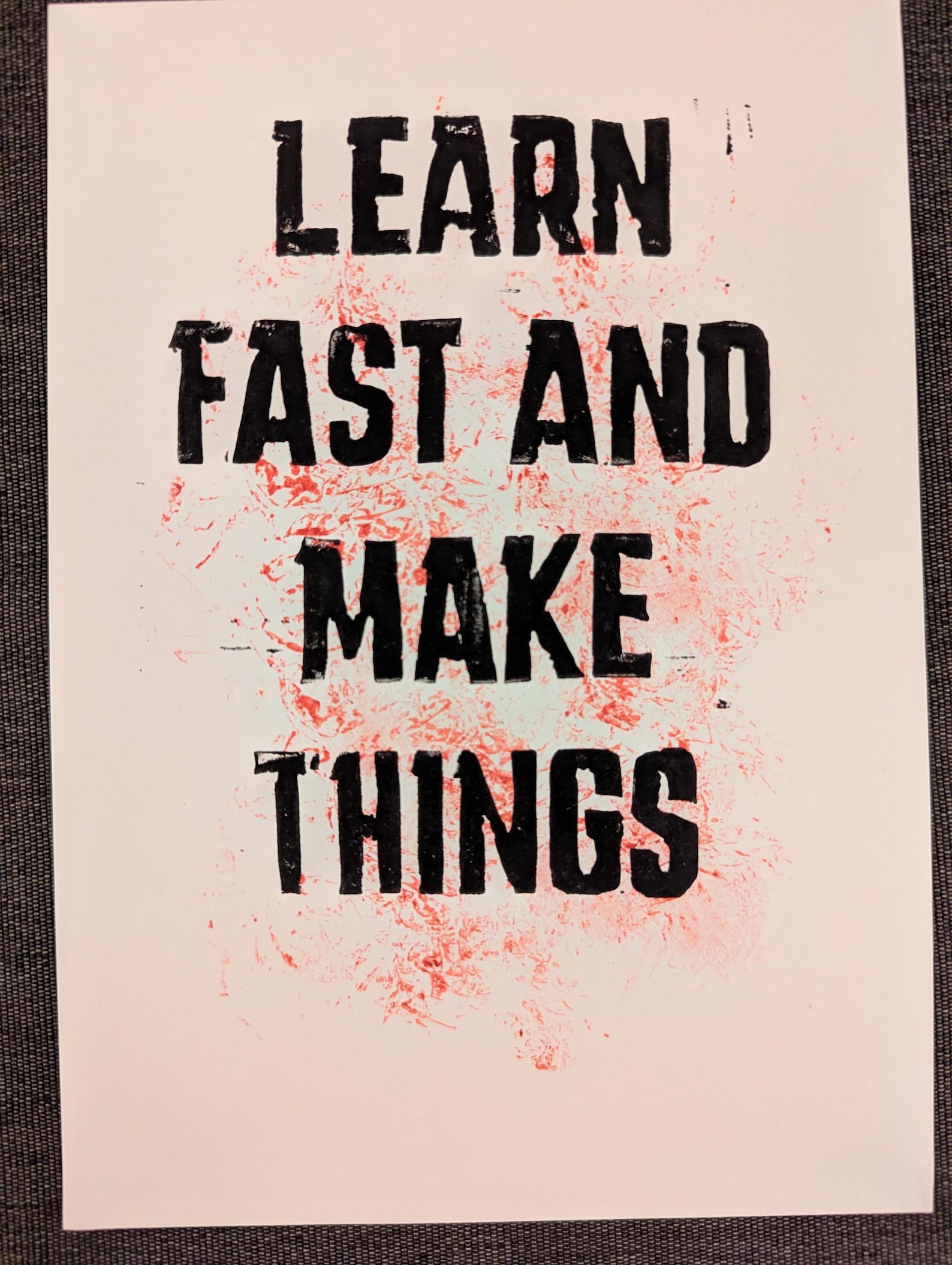
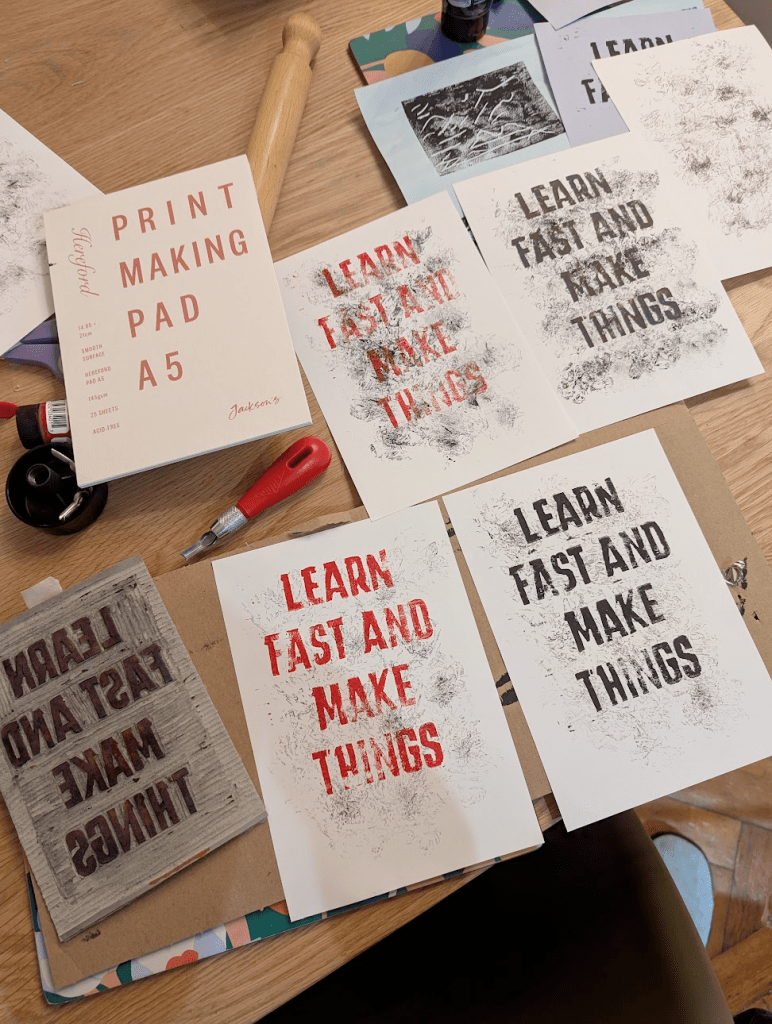
- Managed some decent prints so popped them up on Etsy. I’ve been enjoying the process of making and learning (funny that) with these prints. Lino printing is also very achievable without loads of specialist equipment or dedicated space as well.



 alistairuff
Leave a comment